
Exodus 1:1-2:10
In the book of Exodus things begin to change for Israel. There arises a new king over Egypt, who did not know Joseph, therefore the Jews lost their favor, they became slaves in Egypt. Part of the reason they were made slaves was because of the fact that there was a population explosion among the Jews, and the Egyptians were afraid (Exodus 1:7-9).
The Jews however, would “grow” even more through these afflictions. We read in:
Exodus 1:12 (NKJV) “But the more they afflicted them, the more they multiplied and grew. And they were in dread of the children of Israel.”
We see that truth throughout the narrative, the enemy opposes and fights to have his way, but he can’t stop the plans and purposes of God. As a matter of fact, I’ve always found it both fascinating and encouraging to see that God can even take the so-called strategy of Satan and use it for good. Here we read of Pharaoh’s plan to bring Israel down by commanding the people to cast the Jewish boys into the river, but God used that very plan to place Moses in the Euphrates, have him float to Pharaoh’s daughter, who would teach him to read and write and lead, and then he’d be raised up by God to defeat the Egyptians and deliver God’s people.
Wow!
Truly, no weapon formed against us will prosper! (Isaiah 54:17)
Exodus 2:11-3:22
The Jewish historian Josephus tells us that Moses was a mighty man in Egypt; that Moses led military conquests and was offered the throne of Egypt, but he refused. This may be what the writer to the Hebrews referred to in:
Hebrews 11:24–25 (NKJV) “By faith Moses, when he became of age, refused to be called the son of Pharaoh’s daughter, 25 choosing rather to suffer affliction with the people of God than to enjoy the passing pleasures of sin.”
We also remember Stephen’s words about Moses in:
Acts 7:22 (NKJV) “And Moses was learned in all the wisdom of the Egyptians, and was mighty in words and deeds.”
Stephen goes on to tell us in Acts 7:23-29 that when Moses was 40 years old, it came into his heart to help his people, to visit his brethren, the children of Israel. Stephen’s speech emphasizes the fact that the people weren’t ready, that the Jews would go on to have a history of resisting the Holy Spirit and the deliverers God sent their way (including Jesus).
Although it was good that it came into Moses’ heart, he wasn’t 100% ready either. When he killed the Egyptian, he looked to the right and to the left, but he didn’t look up to God. In all reality, it would take 40 more years for both Moses and the people to be ripe and ready for their new beginning. There was more preparation necessary.
Moses fled to the land of Midian and he became a shepherd. That’s fascinating considering the fact that every shepherd was an abomination to the Egyptians (Genesis 46:34). But God had spent 40 years teaching Moses that he was something, He would spend the next 40 years teaching Moses that he was nothing, so that Moses would spend the last 40 years leading the people, knowing that God could do anything with someone who knew they were nothing.
I’ve always loved the scene in the movie/cartoon Prince of Egypt, when God appears to Moses in the burning bush. The burning bush symbolizes Israel, in the fire but not consumed. When Moses drew near he was commanded to remove his sandals from his feet, for the place he stood was holy ground (sandals symbolizing the work of man).
It was time.
Exodus 3:7 (NKJV) “And the LORD said: ‘I have surely seen the oppression of My people who are in Egypt, and have heard their cry because of their taskmasters, for I know their sorrows.’”
The passage above is beyond beautiful when we consider that the God of the universe sees our oppression, God hears our cries, and God even knows our sorrows – in His timing He will “come down” to deliver us.
This was the commission of Moses, who by this time had been reduced to zero confidence in himself.
When Moses asked, “Who shall I say sent me, what’s Your name?” God responded with His wonderful name “I Am.” (Exodus 3:14) Not – “I was,” or “I will be.” “I Am” is in reference to His constant and eternal existence past, present, and future; it’s in reference to His self-sufficiency; it’s a concept we must capture as Christians, that God is all we need whenever we need Him (all the time).
God says, I Am Your Friend. I Am Your Healer. I Am Your Love. I Am Your Strength. He is all we need in every season and situation of life.
We get a glimpse of this in the 7 “I Am” statements of Jesus in the Gospel of John. Jesus said, I Am the Bread of Life, I Am the Light of the World, I Am the Door, I Am the Resurrection and the Life, I Am the Good Shepherd, I Am the Way, the Truth, and the Life, and I Am the Vine.
As a matter of fact, Jesus took this name – “I Am” for Himself throughout the Gospel of John which presents to us the deity of Christ. We read this explicitly in:
John 8:58 (NKJV) “Jesus said to them, ‘Most assuredly, I say to you, before Abraham was, I AM.’” (see also John 8:24)
God informed Moses that Pharaoh wouldn’t let His people go, so the LORD would stretch out His hand and strike Egypt…after that, His people would be free. It would require the death of the firstborn, and the blood of the Passover Lamb.
Hmmm, I wonder what that represents? (John 3:16; 1 Corinthians 5:7).
Exodus 4:1-5:21
There was a time when Moses was convinced that “he was the man!” But 40 years of being a shepherd had thoroughly humbled him. We read back in Exodus 2:21 that he was “content,” to live the simple life in Midian.
It’s time. So God appears to Moses in a burning bush – speaking with him – but Moses is resisting the call, he doesn’t think he has what it takes to do the job. Humility is good, but doubt isn’t, and definitely not disobedience – Moses is pushing the envelope, battling the boundaries in many ways. He’s asking God for signs to convince the people of His commission. He’s telling God that He can’t talk, he’s not eloquent, he has a stutter. God brings up a good point, “Who made you Moses? Who made the mouth? I did! So go!”
When it comes to ministry and our mission in life, all that matters is God! We will never be worthy and we must not look to our own ability. Is He calling us to the task? If so, He will help us complete the task, after all it’s not just a mission, it’s a CO-mission; He will be with us!
Exodus 4:12 (NKJV) “Now therefore, go, and I will be with your mouth and teach you what you shall say.”
We see in essence, the same thing in the Great Commission, the marching orders of Jesus to all of us, wherein He promises to be with us!
Matthew 28:19–20 (NKJV) “Go therefore and make disciples of all the nations, baptizing them in the name of the Father and of the Son and of the Holy Spirit, teaching them to observe all things that I have commanded you; and lo, I am with you always, even to the end of the age.” Amen.
The LORD is so good, that He even uses Moses’ mistake to bring him a helper, his brother Aaron who would become Moses’ assistant and future High Priest of Israel. We all need helpers in ministry. God would speak to Moses, and Moses would speak to Aaron, who in certain situations, early on, would be the spokesman. Eventually Moses became quite an orator.
As Moses and his family set out to Egypt, we have a bizarre story in which God threatens to kill Moses – more than likely he became deathly ill (Exodus 5:24-26). He and his wife knew why – it was because Moses hadn’t circumcised his sons. The LORD had commanded the Jews to do this as a sign of their faith in Him and entrance into the Abrahamic Covenant (see Genesis 17:10-14), but Moses hadn’t done this. As you read just a little between the lines, and note the reaction of Moses’ wife Zipporah (who was forced to do it herself, but complained bitterly), more than likely Moses had brought this up to his wife, she opposed it, and Moses had chosen to obey his wife instead of God. It’s dangerous for any of us to obey any person at the expense of obedience to God.
The first meeting with elders of Israel went well. We read in:
Exodus 4:31 (NKJV) “So the people believed; and when they heard that the LORD had visited the children of Israel and that He had looked on their affliction, then they bowed their heads and worshiped.”
I have mixed emotions at this point. I’m not saying their expression of faith and worship wasn’t sincere, but we will see that this “belief” on their part, didn’t last too long. The moment circumstances went sour the whining (and doubting), began. God help us to keep the faith, knowing beyond a shadow of a doubt that He will keep His Word. This doesn’t mean that the journey will be smooth sailing, it simply means He will get us to the other side.
Moses issued a declaration of war against Pharaoh; the slaves of Israel versus the soldiers of Egypt, the children were challenging the chariots, who would win? It’s a lot easier to determine the answer to that question by remembering what’s really going on? It’s God against Satan – and we all know that God wins, every time – big time.

Exodus 5:22-7:25
The deliverance didn’t begin the way Moses or the people would have anticipated. They figured since God was involved and had come down to deliver them, Pharaoh would bow down and oblige. But life on earth is much more complex than that. God’s plan is deeper, and man has a free will that God does not violate.
God explains briefly to Moses, that He was about to use Pharaoh’s resistance to punish the nation of Egypt so that both Israel AND Egypt would know who He is – the LORD God almighty!
God reveals His personal name to Moses in Exodus 6:2-3. As you read through the Bible you’ll notice the use of the words Lord and LORD (all caps) for God. Lord is the Hebrew word Adonai and is the equivalent to our English title Lord. But LORD (all caps) is God’s covenant name as revealed here in Exodus 6 (probably Yahweh). Because the Jews were afraid to say His Name fearing that they might take it in vain, they we’re not certain on the exact pronunciation, because of the fact that there were no vowel letters in Hebrew. All that to say, when you read Lord, you’ll know it’s just that, but when you read the word LORD, you’ll know it’s His personal covenant name. For more information on this topic you can check out this article at Got Questions.
The LORD had heard the groaning of His people, He remembered His covenant with Abraham, Isaac, and Jacob and He once again promised to redeem them from Egypt with an outstretched arm and bring them into the Promised Land. We read the best part of all in:
Exodus 6:7 (NKJV) “I will take you as My people, and I will be your God. Then you shall know that I am the LORD your God who brings you out from under the burdens of the Egyptians.”
God was taking Israel as His people, personally! Moses relayed the message to the people, but they refused to listen any longer, they had become too discouraged by their difficulty.
This section reminds me that God is personal and has personal promises for all of us. We who are Christians have an even better covenant than the Abrahamic, or Mosaiac, or Old Covenant offered back then. We have entered into a Covenant with God through His Son, and the New Covenant is actually filled with better promises (Hebrews 8:6). Be encouraged my friend, God will defeat all our enemies, work it all out for good, and lead us into the Promised Land.
The genealogy in Exodus 6 moves quickly to that of Moses and Aaron who we come to discover are of the Tribe of Levi. We have the names of their parents, Amram and Jochebed (Exodus 6:20), and we learn that Aaron was 3 years older than Moses (Exodus 7:7). Aaron was 83 and Moses was 80 years old when they began this new adventure. It’s never too late for a new beginning!
When the LORD says He’s made Moses as God to Pharaoh (Exodus 7:1), it’s not that He’s making Moses a member of the Godhead, it’s just that the LORD is about to raise Moses up, “sky-high” in the sight of Pharaoh and make him, in one sense, His representative on earth.
The next round in the battle is Moses and Aaron going into the presence of Pharaoh, issuing God’s command to let His people go. Watching Aaron’s rod transformed into a snake and swallow up their rod spoke volumes to them, but they wouldn’t listen. Yes, the enemy can work his lying wonders (2 Thessalonians 2:9), to a certain extent, but as we’ll see, he has limits and they pale in comparison to the power of God.
Tragically, Pharaoh’s heart GREW hard. We will see as we follow the story on this, that for the first 5 plagues, Pharaoh hardens his own heart – and then, when he crosses the line, GOD will harden Pharaoh’s heart for His own purposes. May we be so very careful never to harden our hearts to God…because it might GROW even harder.
The first plague was turning the water to blood. The Egyptians worshipped gods connected to the Nile River, but the LORD is about to defeat their gods (Exodus 12:12) with the 10 plagues He would bring their way (see chart below). Pharaoh arrogantly proclaimed that he didn’t know the LORD – who He was (Exodus 5:2) but he would eventually learn the hard way, by the time all this is said and done.

Exodus 8:1-9:35
I’ve always loved the reason God gives for freedom; we read it repeatedly in this section:
Exodus 8:1 (NKJV) “And the LORD spoke to Moses, ‘Go to Pharaoh and say to him, ‘Thus says the LORD: ‘Let My people go, that they may serve Me.’’”
God was about to set His people free – not for the liberty to do whatever they wanted to do, but for the liberty to serve Him. I believe this to be true for all of us as Christians, we’ve been saved to serve. (see also Galatians 5:13)
The LORD was about to demonstrate to Israel, to Egypt, to the whole wide world, and every individual (including Pharaoh, you, and me), who He is. So we see Him defeating the most powerful nation in the world and all the so-called gods of Egypt. Its not much of a battle. God sends frogs – everywhere , lice – everywhere, flies – but only in Egypt, disease and death on the livestock of the Egyptians, boils and sores that break out on the Egyptians, hail – like never before. All of these would be blows to their idols, all this was done in dramatic fashion so that they might truly know who the LORD is. I believe He wanted them to be saved (2 Peter 3:9).
Exodus 8:10 (NKJV) “…that you may know that there is no one like the LORD our God.”
Exodus 8:22 (NKJV) “…in order that you may know that I am the LORD in the midst of the land.”
Exodus 9:29 (NKJV) “…that you may know that the earth is the LORD’s.”
Some people struggle with the fact that the LORD hardened Pharaoh’s heart as seen in Exodus 9:12, something also mentioned in Romans 9:18, but as the chart shows below, Pharaoh first hardened his own heart – 5 times!

Believers and non-believers need to take heed to this lesson. Be open, stay sensitive to the Holy Spirit – respond to His voice. May we learn from the mistakes of Pharaoh and even from the nation of Israel (later they will harden their hearts against God).
We read that lesson in:
Psalm 95:7–8 (NKJV) “For He is our God, and we are the people of His pasture, and the sheep of His hand. Today, if you will hear His voice: 8 “Do not harden your hearts, as in the rebellion, as in the day of trial in the wilderness.”
Today, if you will hear His voice…do not harden your hearts.
Another important lesson we need to beware of is the temptation to compromise. Notice what happens next:
Exodus 8:25 (NKJV) “Then Pharaoh called for Moses and Aaron, and said, ‘Go, sacrifice to your God in the land.’”
The enemy will offer us “compromises” like this, go ahead and serve God but do it in my land, he says. Tragically there are many compromising christians serving God “in the land,” (one foot in the world and one foot in the church). Later Pharaoh will offer Moses other compromises (just the men can go) (you can go without the livestock). Moses doesn’t buy it. In Exodus 10:25 he tells Pharaoh that, “…not a hoof will be left behind.”
I love that statement, no compromises, no exceptions…we must not negotiate with nonsense, or do “deals” with the devil!
Exodus 10:1-12:13
God hardened the heart of Pharaoh in order to reach the heart of mankind.
Exodus 10:1–2 (NKJV) “Now the LORD said to Moses, ‘Go in to Pharaoh; for I have hardened his heart and the hearts of his servants, that I may show these signs of Mine before him, 2 and that you may tell in the hearing of your son and your son’s son the mighty things I have done in Egypt, and My signs which I have done among them, that you may know that I am the LORD.” (see also Exodus 11:9)
And here we are, over 3,000 years later, reading what God has done – so that we might know this God of Abraham, Isaac, Jacob, Joseph, and Moses, truly is the LORD.
We’ve already touched on the fact that God only hardened Pharaoh’s heart after he hardened his own heart – 5 times! (See chart above)
Plague # 8 – Locust like never before (Exodus 10:14).
Plague #9 – Darkness in Egypt, but not in Goshen; a darkness that could even be felt (Exodus 10:21) (Perhaps a taste of hell? See Matthew 8:12; 22:13; 25:30).
As was mentioned previously, Pharaoh offered Moses various compromises (Exodus 10:11, 24) but “not a hoof would be left behind” (Exodus 10:26).
The final plague upon Egypt would be the the death of the firstborn, requiring an innocent Lamb to be sacrificed; this would provide the opportunity for God’s people to be set free!
This was such a huge event for Israel that this would commence the Jewish calendar. We read in:
Exodus 12:2 (NKJV) “This month shall be your beginning of months; it shall be the first month of the year to you.”
It would be a new beginning for God’s people.
The Passover Lamb would be a picture, a typology, a prophecy of Jesus. The Jews were instructed to kill the Lamb, take the blood and place it on their doorposts and lintel; when the Angel of death descended on the land, if He saw the blood applied to the household, He would “Passover” that home (Exodus 12:13). The moment we place our faith in Jesus Christ, the blood is applied to our lives, and spiritually speaking, we will not die (John 11:25). It’s not enough for the Lamb to die, we must believe and receive this blood, personally. The Lamb died in our place and paid the punishment we deserved, so that we can be forgiven.
John the Baptist pointed this out about Jesus:
John 1:29 (NKJV) “The next day John saw Jesus coming toward him, and said, ‘Behold! The Lamb of God who takes away the sin of the world!’”
Paul the Apostle pointed this out about Jesus:
1 Corinthians 5:7 (NKJV) “Therefore purge out the old leaven, that you may be a new lump, since you truly are unleavened. For indeed Christ, our Passover, was sacrificed for us.”
Peter pointed this out about Jesus:
1 Peter 1:18–19 (NKJV) “…knowing that you were not redeemed with corruptible things, like silver or gold, from your aimless conduct received by tradition from your fathers, 19 but with the precious blood of Christ, as of a lamb without blemish and without spot.”
John the Beloved pointed this out about Jesus (Revelation 1:5; 5:6).

Exodus 12:14-13:16
The LORD implements the first Passover and commands that the children of Israel celebrate it every year on the 14th day of the 1st month – the month of Abib (this would eventually be called the month of Nisan).
God repeats His command that there be no leaven found for the 7 days leading up to the Passover. The Jews would involve the entire family as they searched the house, every cupboard, every nook and cranny to make sure there was not leaven anywhere in the home. We read in:
Exodus 12:15b (NKJV) “…For whoever eats leavened bread from the first day until the seventh day, that person shall be cut off from Israel.”
Leaven would lead to death!
Leaven is usually symoblic of sin. (1 Corinthians 5:6-8; Galatians 5:9) We are to search our own hearts, our own homes; we are to repent of all known sin. We are to be holy. But we are also to be grateful for Jesus who is our Passover Lamb without sin, who takes away the sin of the world. Paul had this in his heart when he wrote to the Corinthians in:
1 Corinthians 5:7 (NKJV) “Therefore purge out the old leaven, that you may be a new lump, since you truly are unleavened. For indeed Christ, our Passover, was sacrificed for us.
I was blessed to read two times in this section of Israel’s obedience:
Exodus 12:28 (NKJV) “Then the children of Israel went away and did so; just as the LORD had commanded Moses and Aaron, so they did.”
Exodus 12:35 (NKJV) “Now the children of Israel had done according to the word of Moses, and they had asked from the Egyptians articles of silver, articles of gold, and clothing.”
In response to God’s word they kept the Passover, avoiding death. In response to God’s word they asked from the Egyptians, articles of silver, articles of gold, articles of clothing and in that sense they plundered the Egyptians and would have all that would be necessary to build the Tabernacle.
If only we would simply obey God like this and “do” according to the Word! This is true worship (Exodus 12:27-28).
I was also blessed to see the emphasis and the reasoning for implementing the yearly Feasts of Passover and Unleavened Bread…so that our children would know.
Exodus 13:8 (NKJV) “And you shall tell your son in that day, saying, ‘This is done because of what the LORD did for me when I came up from Egypt.”
Exodus 13:14 (NKJV) “So it shall be, when your son asks you in time to come, saying, ‘What is this?’ that you shall say to him, ‘By strength of hand the LORD brought us out of Egypt, out of the house of bondage.”
Every generation is responsible to pass the message of God’s love and redemption to the next generation, especially parents to their children (Deuteronomy 6:7-9; 11:18-21).
God set the children of Israel free after 430 years of bondage in Egypt (Exodus 12:40), by the blood of the Lamb and the death of the Firstborn in every Egyptian household. These are shadows of the substance.
Another reminder throughout the ages of what God had done would be His requirement/ownership of all the firstborn of the children of Israel (even their livestock). They would either be given to God or redeemed, that they would never, ever forget the strong hand of the salvation of the Lord when God struck the firstborn in Egypt.
One last thing. I noticed the word “armies” applied 3 times to the children of Israel (Exodus 12:17, 41, 51). We all know that the only army they had (or us for that matter), is the arm and army of the Lord (Exodus 7:4). He fights for us as we’ll see in Exodus 14:14.
Exodus 13:17-15:18
I’ve always loved the way the LORD led His people so personally, just as He does us…if only we’d follow (Exodus 13:21-22).
Nehemiah 9:12 (NKJV) “Moreover You led them by day with a cloudy pillar, and by night with a pillar of fire, to give them light on the road which they should travel.”
Once again, we’re reminded to keep our hearts soft and sensitive to the Holy Spirit. A person must not harden his or her heart against the voice of God, for the day may come when one crosses the line, and God hardens it for them, in order to accomplish His purposes. This is what happened to Pharaoh, God hardened his heart in order to show the Jews, the Egyptians, and all the world, how awesome He is (Exodus 14:4).
The LORD warned Moses in advance about Pharaoh’s army, but He also informed him of Israel’s victory.
The Jews were trapped. The Red Sea in front of them, mountains beside them, and the Egyptian army with 600 chariots in pursuit. Chariots were the equivalent to modern-day tanks. What were these shepherds, brick-makers, women, and children to do?
Trust the Lord, the enemy cannot touch you without first going through God…so hold tight to that truth.
Moses commands the people to stop complaining, do not fear…and he gives them good reason.
Exodus 14:13–14 (NKJV) “And Moses said to the people, ‘Do not be afraid. Stand still, and see the salvation of the LORD, which He will accomplish for you today. For the Egyptians whom you see today, you shall see again no more forever. 14 The LORD will fight for you, and you shall hold your peace.’”
We will inevitably face those situations in life where it seems as if there’s no way out, but we need to remember, God always makes a way.
The LORD protected His people, directed His people, and in the process defeated every form of opposition (not one of their enemies remained – Exodus 14:28 – their defeat was complete).
In future generations, the Jews were to look back at the crossing of the Red Sea, the same way Christians look back to the Cross and Resurrection. It was there that the enemy was defeated, and it was there where God proved beyond a shadow of a doubt, His power beyond measure! We should have complete confidence to face today and every day in the future, because of God’s victory on our behalf, already proven in the past.
God has redeemed His people out of Egypt. God has redeemed His people out of the world, and God has redeemed His people from the power and penalty of sin.
It’s no wonder they sang!
Warren Wiersbe, “When they walked by sight, Israel complained (14:10–12); but when they believed God and saw His mighty hand at work, they praised Him. Redemption should lead to rejoicing (Luke 15:1–24).”
Exodus 15:19-17:7
The worship songs were wonderful, weren’t they? But it didn’t take long, and it didn’t take much for those singers to sin, for that congregation to complain, and even contend against Moses and Aaron (ultimately against God).
It’s understandable to communicate, “Hey Moses, looks a little dry here.” Moses would have probably said, “You’re right, let’s pray. The same God who saved us from Egypt, will supply all of our needs. It doesn’t mean there won’t be times when we get a little thirsty, or a little hungry, but He’s testing us…we need to trust Him.”
But the people complained, and they contended. Moses did the right thing by crying out to God, but I’m sure the pressure from the people made His life and prayer time tougher than it should have been.
It’s hard to believe, but just 6 weeks after experiencing such a great salvation and redemption from Egypt, they wanted to return to their slavery (Exodus 16:1-3), primarily because they wanted meat and bread to eat. Imagine that! After God had saved them in such spectacular fashion, they thought God was only good at starting this new life, that He couldn’t complete this mission, that they were all going to die. They believed the lie.
After all God’s done for us let’s be sure to trust Him. It’s okay to communicate, but not to grumble or complain. God will be testing us.
I’m reminded of:
Hebrews 13:17 (NKJV) “Obey those who rule over you, and be submissive, for they watch out for your souls, as those who must give account. Let them do so with joy and not with grief, for that would be unprofitable for you.”
God would provide this amazing Manna in the wilderness for 40 years, just as He provides for us, one day at a time. Now, some might complain about the menu and ask God for more of a variety, after all, 40 years of pancakes might sound monotonous, but keep in mind, it wasn’t supposed to be 40 years. It should have only been 2 years and 11 days. 2 years at Mount Sinai and then the 11-day journey to the Promised Land (Deuteronomy 1:2). But their doubt and disobedience caused them to wander in the wilderness for 40 years.
I have a hunch we need to be a lot more careful when it comes to food. Beware of gluttony, beware of a life where our god is our belly (Philippians 3:19). Don’t worry about food and don’t worship it either, just take in what God gives, each and every day – it can be like Manna for Today. We read the Psalmists words about the Manna:
Psalm 78:24–25 (NKJV) “Had rained down manna on them to eat, and given them of the bread of heaven. Men ate angels’ food; He sent them food to the full.”
The Manna would be a picture of Jesus, God’s bread from heaven (John 6:30-35).
We have another picture of Jesus presented to us in the section, when the people once again, contended with Moses for water (Exodus 17:2). Moses again, did the right thing by crying out to the Lord, who instructed him to strike the rock and water would come out of it. The Rock was a picture of Jesus.
We read in:
1 Corinthians 10:4 (NKJV) “…and all drank the same spiritual drink. For they drank of that spiritual Rock that followed them, and that Rock was Christ.”
When Jesus was “struck” in His death and resurrection, this opened the door for the Holy Spirit to come, which the water here symbolizes (see also John 7:37-39).
This was not going to be an easy task for Moses and Aaron, leading 3 million people in the middle of the wilderness. Especially fickle folks like them. It’s hard and even heartbreaking to fathom that after all God had done, they questioned whether or not the LORD was even among them (Exodus 17:7).
(Sigh) May that not be us.
Exodus 17:8-19:15
The nation of Amalek attacks Israel (Exodus 17:8) and Moses has an interesting battle plan. As Joshua and the men are sent out to fight, Moses would ascend to the top of the hill and lift his hands to God. We read the initial results:
Exodus 17:11 (NKJV) “And so it was, when Moses held up his hand, that Israel prevailed; and when he let down his hand, Amalek prevailed.”
Do you “get” the picture here? As Moses sought the LORD, as Moses looked to the Lord, reached up to Him, as he worshiped and prayed, the nation prevailed, symbolized in the lifting of his hands. But naturally he would tire in the process, so he had to let down his hands at times – and this is when Amalek prevailed over Israel. What to do? Aaron and Hur come alongside Moses, hold up his hands, and Israel wins.
Pastor Chuck Smith (and others) see this as the help a pastor needs in being a vessel of blessing and a weapon of victory for the people. Pastors are called to prayer and the ministry of the Word (Acts 6:4) so when other assistants come to their side and “hold up their hands” by taking care of the other responsibilities in the church, this allows the pastor-servant-leader to worship and pray and hear from God for the congregation…resulting in victory for the people.
We see a similar principle in Jethro’s question and eventual advice to Moses after seeing all the people going to Moses from morning till evening.
Exodus 18:14 (NKJV) “So when Moses’ father-in-law saw all that he did for the people, he said, ‘What is this thing that you are doing for the people? Why do you alone sit, and all the people stand before you from morning until evening?”
Moses let his father-in-law Jethro know that he was the counselor and guide for the people. Perhaps to some it sounded noble that Moses would make himself available for EVERYONE, but anyone could see that this was an absolute impossibility. Moses would wear himself out and the needs of the people would NOT be met.
Adrian Rogers said, “A pastor who at any given time is available to everyone, is usually no good to anyone.”
Jethro gives Moses excellent advice, I don’t think I can word or summarize it any better:
Exodus 18:19–23 (NKJV) “Listen now to my voice; I will give you counsel, and God will be with you: Stand before God for the people, so that you may bring the difficulties to God. 20 And you shall teach them the statutes and the laws, and show them the way in which they must walk and the work they must do. 21 Moreover you shall select from all the people able men, such as fear God, men of truth, hating covetousness; and place such over them to be rulers of thousands, rulers of hundreds, rulers of fifties, and rulers of tens. 22 And let them judge the people at all times. Then it will be that every great matter they shall bring to you, but every small matter they themselves shall judge. So it will be easier for you, for they will bear the burden with you. 23 If you do this thing, and God so commands you, then you will be able to endure, and all this people will also go to their place in peace.”
The difficulties (great matters) were to be brought to Moses, but the other issues would be delegated to leaders who loved the Lord and had been taught God’s Word. Thank God Moses heeded Jethro’s advice!
It’s now been 3 months since Israel has been redeemed from Egypt and God is about to establish a covenant with them as His special people. God cared for and carried them to Himself and wanted them to be that special treasure above all people entering into a love relationship (that’s his heart behind the command to keep his covenant – see John 14:21).
And just in case someone sees this as God loving Israel at the expense of the rest of the world, notice their calling in Exodus 19:6, that they were called to be a kingdom of priests. Priest are in one sense, representatives of God, called to reach out to the rest of the world. God wanted to reach the world through Israel…if only they would have realized this role and responsibility in life!
Exodus 19:16-21:21
God was about to do something so amazing. He was about to reveal His Word to-and-through his mediator Moses in order to communicate the civil law to Israel who would be established as a nation ruled by God. This theocracy was unique for them among all the nations of the world.
So the LORD “descended” in the thunder, and lightning, and cloud, and smoke, and sound of a trumpet. It was all intended to plant a healthy fear into the hearts of the people…and it worked for the moment (Exodus 20:18-21).
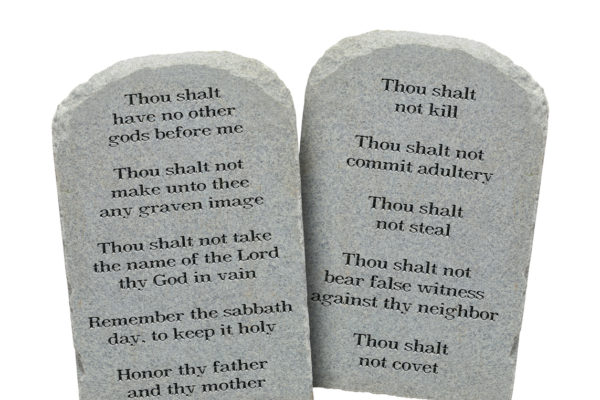
But – before God established the civil law, He revealed the moral law, the 10 Commandments. The first 4 commandments deal with our relationship with God (vertical), while the final 6 commandments have to do with our relationship with others (horizontal).
The 10 Commandments are godly goals to strive for as a society. What harmony we would have if only we held to them, and we should never cease in our attempt to keep them – but – they were also given to show us we’re sinners, due to the fact that no one can keep the 10 Commandments perfectly. Keep in mind Jesus’ words – that it’s not simply the act on the outside God considers, it’s also the thoughts on the inside (Matthew 5:21-28).
You’ll notice as we read through the Bible that 9 of the 10 Commandments are repeated in the New Testament explicitly, so the moral law (unlike the civil and ceremonial law) still stands. The only commandment NOT repeated in the New Testament specifically, is the Sabbath Day. Regarding the Sabbath, the Bible says we are not to judge others on this issue (Colossians 2:16), and although it’s a wise principal and good for us in every way, it’s not mandated. If someone does choose to keep 1 day out of the week as a Sabbath, that person has the option of choosing which day works best for them (Romans 14:5).
The issue of slavery is brought up here in Exodus 21. I found the following quote from “Got Questions” to be helpful.
“The Bible does not specifically condemn the practice of slavery. It gives instructions on how slaves should be treated (Deuteronomy 15:12-15; Ephesians 6:9; Colossians 4:1), but does not outlaw slavery altogether. Many see this as the Bible condoning all forms of slavery. What many fail to understand is that slavery in biblical times was very different from the slavery that was practiced in the past few centuries in many parts of the world. The slavery in the Bible was not based exclusively on race. People were not enslaved because of their nationality or the color of their skin. In Bible times, slavery was based more on economics; it was a matter of social status. People sold themselves as slaves when they could not pay their debts or provide for their families. In New Testament times, sometimes doctors, lawyers, and even politicians were slaves of someone else. Some people actually chose to be slaves so as to have all their needs provided for by their masters.” – Got Questions (full article)
Exodus 21:1-6 reveals the laws of a bondservant. This title of “bondservant,” is what many of the Apostles called themselves in relationship to Jesus Christ – willing servants, slaves, who have surrendered their rights to serve the LORD forever. It’s all rooted in love. We read in:
Exodus 21:5 (NKJV) “But if the servant plainly says, ‘I love my master, my wife, and my children; I will not go out free,’”
May this be the declaration of our hearts.
As we read through the laws given to Israel, we may consider some to be not just harsh, but wrong. Imagine facing the death penalty because you cursed your parents! Well, it is harsh, but it isn’t wrong. I’m not saying this should be a law for all nations today (context needs to be considered) but it is tragic to see the disrespect and dishonor many children have towards their parents today. Those parents are the symbol of authority, so when children have no conviction to honor and obey their parents, it spills over into all other forms of authority – teachers, police officers, government, and ultimately God.
Penalties described and applied are indeed preventative.
Exodus 21:22-23:13
As we read through the details of legislation for the land, it’s important to keep in mind that these are laws for the nation of Israel – in that day – as a theocracy. Although there is much wisdom in these principles, and many of our laws here in the United States of America are rooted in this Judeo-Christian framework, we are not to see them as binding to all other nations today.
This is Israel’s Civil Law.
Statutes concerning physical injury (Exodus 21:18-27)
Statutes concerning culpable neglect (Exodus 21:18-36)
Statutes concerning theft (Exodus 22:1-4)
Statutes concerning property damage (Exodus 22:5-6)
Statutes concerning safe deposits (Exodus 22:7-13)
Statutes concerning borrowing (Exodus 22:14-15)
Statutes concerning sexual seduction (Exodus 22:16-17)
Statutes concerning idolatrous customs (Exodus 22:18-20)
Statutes concerning the care of the needy (Exodus 22:21-27)
Statutes concerning reverence (Exodus 22:28-31)
Statutes concerning legal justice (Exodus 23:1-9)
Statutes concerning the Sabbaths (Exodus 23:10-13)
In Exodus 21:22-23 we see the acknowledgment, identity, and value of the child within the womb, whom the Lord sees as a life. If a fight takes place and a man causes the death of an unborn child, that man, under the letter of the law, should be put to death – “…but if any harm follows, then you shall give life for life…” God acknowledges the life of the child within the womb. May we also acknowledge every child’s right to life, at the moment of conception; may we hold tightly to the sanctity of life.
In these laws, we are beginning to see that God is just and holy. May that be embedded deep within our hearts in order to cultivate a healthy fear of God…but isn’t it noteworthy to see the way the LORD also reveals Himself as a gracious God? (Exodus 22:27). How important it is that we have this balanced and Biblical understanding of who God is.
Exodus 23:2 has always jumped out at me:
Exodus 23:2 (NKJV) “You shall not follow a crowd to do evil…”
As Christians we don’t just go with the flow. May we know the LORD and His Word well enough to identify when the trends and mores of the majority are actually evil (1 John 5:19).
Exodus 23:4-5 is a practical way of showing love to our enemies. We may not be “feeling” it, but we are called to love them in practical and helpful ways…usually in time our heart will follow.
I like the way Exodus 23:13 is translated in the NIV:
Exodus 23:13 (NIV) “Be careful to do everything I have said to you…”
Amen! It’s as simple as that!
Exodus 23:14-25:40
Three times a year the Jewish men were called to gather together and appear before the LORD, at the Feast of Unleavened Bread, the Feast of Harvest, and the Feast of Ingathering (Tabernacles). It’s always good for the men to get together, centered on the Lord, for we are called to be servant-leaders.
The Feasts (Holy Days) of Israel were times to remember what God had done in their history and to pass HIS-story onto their children. They were also significant shadows of the coming Messiah. We’ll see all 7 Feasts in Leviticus 23.

The Father next speaks to Moses, informing Him that He was sending His Son as an “Angel” to go before them. This doesn’t mean Jesus isn’t God, for the title of angel simply signifies a messenger. In this case Jesus is the Messenger, Mediator, and hence the Angel of the LORD. The Father warned Moses and the people to be sure to listen and obey this Angel, for His name is in Him, and lest He not pardon their transgressions (brings to mind Deuteronomy 18:18-19; Matthew 17:5; Hebrews 1:1-2; 2:1).
They were on the verge of taking over a land inhabited by evil people, they were therefore not to bow down to, or serve those gods; they were to completely destroy and break down their pagan pillars.
“Little by little” the Lord would drive them out we read in Exodus 23:30. It wouldn’t happen overnight, just as it doesn’t happen overnight for any of us. We don’t “arrive” overnight, in a very practical sense, it’s little by little, from faith to faith (Romans 1:17), more and more (Philippians 1:9) – it’s a lifetime of sanctification.
We’re beginning to see the formation of a priesthood as Aaron, Nadab, and Abihu come closer to God. The LORD would speak to Moses, who would relay the message to the people through the others. After hearing the Word of God, the people repeatedly said, “All the words which the LORD has said we will do.” (Exodus 24:3, 7) If only that was always our motto.
Can you picture the people sprinkled in blood? (Exodus 24:8) They are entering into a covenant with God – believing and receiving His blood, with a heart to obey. This is the equivalent of accepting Him as both Lord and Savior. Peter wrote about this in:
1 Peter 1:2 (NKJV) “…elect according to the foreknowledge of God the Father, in sanctification of the Spirit, for obedience and sprinkling of the blood of Jesus Christ: Grace to you and peace be multiplied.”
As Moses was called closer with his assistant Joshua, he left Aaron and Hur in charge (Exodus 24:14). He would be on the mountain for 40 days and 40 nights (Exodus 24:18).
God spoke to Moses who would speak to the people and provide them with an opportunity to give donations towards the building of the Tabernacle. These offerings were not to be coerced, they had to come from those who gave with a willing heart. How beautiful it is that the Lord even allows us to give to Him, may we always give joyfully and willingly!
The rest of this section deals with the construction of the Ark of the Covenant, the Table of Showbread, and the Lampstand. We will see that these designs are given to Moses according to their heavenly pattern, and each is significant to our relationship with God.
The Ark of the Covenant would be placed into the Most Holy Place in the Tabernacle where only the High Priest could enter in once a year with the blood of the sacrifice. He would make atonement for the people. He would sprinkle the blood on the lid, between the cherubim (on the Mercy Seat – symbolizing God’s throne) and He said something so beautiful in:
Exodus 25:22 (NKJV) “And there I will meet with you, and I will speak with you from above the mercy seat, from between the two cherubim which are on the ark of the Testimony, about everything which I will give you in commandment to the children of Israel.”
Jesus would one day go in to that Most Holy Place in Heaven, with His own blood, and make a way for us to meet with Him and LIVE with Him, forever (Hebrews 9:12).

The Table of Showbread would be in the Holy Place. Upon this table the 12 loaves of bread symbolizing the 12 Tribes of Israel would be placed perpetually, as God’s people are always in His presence.

The Lampstand (Menorah) is symbolic of Jesus as the Light of the World, and even of us, reflecting His light (John 8:12; 9:5; Matthew 5:16).
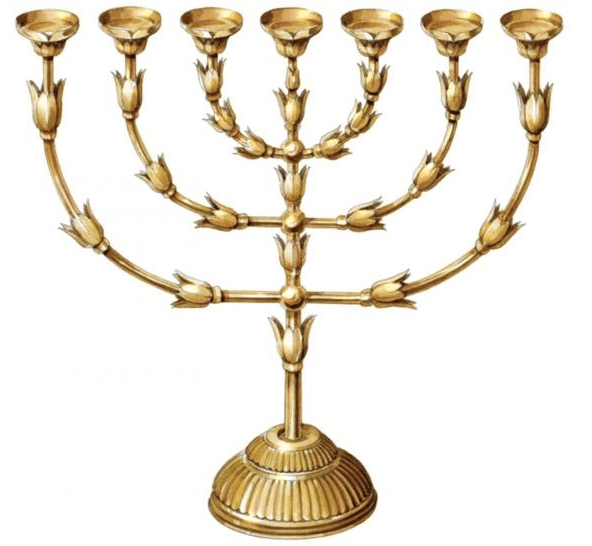
Moses was repeatedly commanded to make sure everything was done according to the pattern shown to Him – due to the significance of the Tabernacle (Exodus 25:9, 40).
Exodus 26-27
It’s amazing to consider the details given to the construction of the Tabernacle, especially when you realize that every little part and portion of it is significant.
The Tabernacle which would be 45 feet by 15 feet, the 10 curtains of fine woven linen, the curtains of goats hair, the covering of rams skins dyed red, and the badger skins above that. Then there’s the boards of acacia wood, the silver sockets, and the bars of acacia wood.
The veil that would separate the Holy Place from the Most Holy Place (Exodus 26:33) was symbolic of the barrier between us and God, for into the Holy Place only the High Priest could enter in, and only once a year on the Day of Atonement (Yom Kippur). When Jesus died on the cross, however, this veil of separation was torn in two from top to bottom, meaning He made a way for us to go in…to His presence, this most Holy Place is available to believers anytime (Mark 15:38; Hebrews 4:16).
Exodus 27:1-2 describes the Bronze Altar where all the sacrifices would take place outside of the Tabernacle, but within the Tabernacle Courts (bronze is symbolic of judgment). The Court of the Tabernacle was 150 feet by 75 feet (see visuals below – zoom in to get a better look).


The children of Israel were commanded to bring the pure oil of pressed olives for the light/lampstand to burn continually. This pressed olive oil would be symbolic of prayer, and isn’t it interesting that Jesus prayed frequently and passionately in the Garden of Gethsemane (Gethsemane means “Olive Press). This oil gave fuel for light, and would be symbolic of the anointing of the Holy Spirit.
Exodus 28
Not only was the LORD establishing the Civil Law of Israel, He was also about to establish the Ceremonial Law. He begins with the Priesthood. We don’t read of Aaron by any means earning this position. God, by His grace, chose him and his sons to serve as the family of High Priests of Israel. He does the same for us when it comes to ministry, He chooses whom He uses, by grace (1 Corinthians 15:10).
The High Priests of Israel would wear holy garments, “…for glory and for beauty” (Exodus 28:2, 40).
We read of the gifted artists who would make these garments (Exodus 28:3). Something I’ve noticed about the Lord, is that nothing is random, every thread, every fabric, every color, every stone, and the placement of it all has significance. I’ve also learned that God is an Artist, seen in the beauty of His creation and colors and the way they catch the eye and heart with their intricate textures and blends intended to go deep. We even read that these artists are not only gifted, but in one sense, Spirit-filled:
Exodus 28:3 (NKJV) “So you shall speak to all who are gifted artisans, whom I have filled with the spirit of wisdom, that they may make Aaron’s garments, to consecrate him, that he may minister to Me as priest.”
Ultimately, Jesus is our High Priest (see Hebrews chapters 5-9) who entered the heavenly tabernacle with His own blood and made a way for His followers once and for all!
Hebrews 9:11–12 (NKJV) “But Christ came as High Priest of the good things to come, with the greater and more perfect tabernacle not made with hands, that is, not of this creation. 12 Not with the blood of goats and calves, but with His own blood He entered the Most Holy Place once for all, having obtained eternal redemption.”
I’ve always loved the way the High Priest bore the names of the children of Israel on his two shoulders (Exodus 28:12) and how he bore their names over his heart (Exodus 28:29). What a perfect picture of Jesus who carries us on His shoulders with such love – who has us in His heart!

Exodus 29:1-30:10
The only way any of us are able to serve in the ministry, is through the grace of God made possible, by the blood of Jesus Christ. Aaron and his sons, who would be High Priests in Israel, are no exception to that, and all these sacrifices we read of here on their behalf, were linked and looking forward to the blood of the Lamb, which cleansed and qualified them for ministry.
God is holy and therefore any call to the ministry is a call to holiness. Ministers are to be washed in the water of the Word (Exodus 29:4; Ephesians 5:26) and washed in the blood of God’s sacrifice (Exodus 29:10-14; Revelation 1:5-6).
The blood applied to the right ear, the right hand, and the right foot, spoke of the forgiveness necessary for the things we’ve listened to, for the things we’ve done, and for the places we’ve gone, that were not right in God’s sight (Exodus 29:20). Later, the Lord would anoint those same parts of the leper’s body with oil, in order to symbolize how what we hear, what we do, and every step we take must be anointed and empowered by the Holy Spirit (Leviticus 14).
When we study the book of Leviticus, God will cover more details on the various sacrifices and offerings that we read of here in Exodus…the sin offering, the wave offering, the heave offering, the grain offering, and the drink offering.
Living so far away from the times of the Tabernacle and Temple we might not be cognizant of the constant deaths that took place, when all these animals were slaughtered as shadows of Christ who would one day be slaughtered for us. Did you notice how Aaron and his sons put their hands on the head of the bull? (Exodus 29:10) This symbolized the transfer of sins to the animal which was then put to death for those sins, on their behalf (Romans 6:23). This is a picture of what Jesus has done for us, how He bore our sins (Isaiah 53:5, 10).
In Exodus 29:38 we read of the two lambs that were sacrificed each and every day, in the morning and at twilight…so much blood, as a constant reminder of God’s way for us to meet with Him. Notice what we read in:
Exodus 29:42 (NKJV) “This shall be a continual burnt offering throughout your generations at the door of the tabernacle of meeting before the LORD, where I will meet you to speak with you.”
I’m always amazed how God would be willing to meet with me, to speak to me, and even the WAY He made a way, by the slaughter of His Son. O what a Savior we have (we’ll never know how much it cost to see our sins upon that cross) He gave His life, His love, His Son, in order to dwell among us and be our God!
Exodus 29:45–46 (NKJV) “I will dwell among the children of Israel and will be their God. 46 And they shall know that I am the LORD their God, who brought them up out of the land of Egypt, that I may dwell among them. I am the LORD their God.”
This is where it’s all heading, for all God’s children. We read in:
Revelation 21:3 (NKJV) “And I heard a loud voice from heaven saying, ‘Behold, the tabernacle of God is with men, and He will dwell with them, and they shall be His people. God Himself will be with them and be their God.’”
God next gave Moses the details for the Altar of Incense which would be symbolic of the perpetual prayers of the people before God’s throne.

How beautiful to think that our prayers rise as incense, as a sweet smelling aroma before the Lord (see Revelation 8:3).
Exodus 30:11-31:18
The Bible Knowledge Commentary offers some details on the ransom: “Whenever a census was taken each Israelite 20 years old or more was to pay a tax to help maintain the tabernacle and services. This tax was considered a ransom (Exodus 30:12) because its payment guaranteed protection from plagues. This helped motivate each male to pay. It was also considered an atonement, a covering for sins. When counted, each adult male, whether rich or poor, was to pay a half shekel, one-fifth of an ounce. A “gerah” was a Babylonian weight. The shekel was silver. This practice became the basis of the later temple tax (Nehemiah 10:32, though the amount then was reduced to one-third of a shekel) that became an annual tax in the time of Christ (Matthew 17:24).”
The next item to be made for the Tabernacle was the Bronze Laver. It was here where water was kept so the priests could wash their hands and feet prior to entering into the Tabernacle service.

If the priests neglected to wash in the Bronze Laver, they were to be put to death (you may have noticed several capital offenses mentioned in this section, punishable by death Exodus 30:33, 38; 31:14). Indeed, God is holy.
Moses was commanded to make a sanctified anointing oil as well as a sanctified incense. The oil was symbolic of the Holy Spirit, the incense was symbolic of prayer. These would be beautiful symbols, but if we don’t guard our hearts we might look to these things, even something like holy water – as being good enough in-and-of itself. What if you burnt incense but didn’t pray? What if you were anointed with holy oil, but refused to be holy? What if you dipped your hands in holy water, but chose not to repent and be cleansed of your sin? All these things in the Tabernacle are a means to an end and point beyond itself – may we remember that, and always hold to the substance, not merely the shadow.
Colossians 2:17 (NKJV) “…which are a shadow of things to come, but the substance is of Christ.”
(see also Hebrews 8:5; 10:1)
I believe everyone of us has talents we’re born with, and gifts we’re born-again with. The key is to discover those gifts, develop, and deploy them for the Kingdom of God. Here we have Bezalel named by God to lead the way with the workmanship of the Tabernacle. God also named Aholiab to assist, as well other gifted artisans who had the Spirit upon them, and wisdom within them – even in their hearts! God is an amazing artist, beautiful and creative; He fashioned us all to function in a special place in the Body of Christ. Have you discovered your place yet?
1 Peter 4:10 (NKJV) “As each one has received a gift, minister it to one another, as good stewards of the manifold grace of God.”
The Jews were to keep the Sabbath and rest on the 7th day (what a beautiful gift). It’s too bad that over the years they made so many rules for the Sabbath, that it became a burden rather than a blessing.
The Old Covenant had the law written with the “finger” of God on tablets of stone. The New Covenant would also be written by God, but on our hearts instead. Paul wrote to the Corinthians:
2 Corinthians 3:3 (NKJV) “…clearly you are an epistle of Christ, ministered by us, written not with ink but by the Spirit of the living God, not on tablets of stone but on tablets of flesh, that is, of the heart.”
Exodus 32-33
Moses had left Aaron and Hur to serve and tend to the people, while he met with the LORD on the mountain (Exodus 24:13-14). None of them were aware it would take 40 days and 40 nights to receive the Law (Exodus 24:18).
The children of Israel couldn’t wait that long, so they asked Aaron to take over, “…for as for this Moses, the man who brought us up out of the land of Egypt, we do not know what has become of him.” (Exodus 32:1)
In one sense, it’s understandable that the people might wonder, why so long? But we need to know that God’s delays are not God’s denials, we must wait on the LORD, His timing is best.
Aaron was not a good leader throughout this crisis. Our children ask, “How long?” We as parents, remind them, “Be patient, it’s all in God’s timing.” We might even correct them, “You shouldn’t whine or complain.” The young and immature are almost always impatient, but leaders shouldn’t be. When Aaron was called to lead, he failed miserably; he just went with the flow and followed the crowd rather than following the LORD.
Aaron asked for their gold, he fashioned it into a calf (the influence of Egypt) and told the people that this was the LORD. It’s not enough to get the name right, we must yield to the way God has revealed Himself to us, and a golden calf is not our God. It’s no wonder the people simply did what the world back then would do, they ate, drank, and “played” (it wasn’t football or Scrabble, if you know what I mean).
At this point, God tests and trains Moses; it’s as if God is ready to disown the people:
Exodus 32:7 (NKJV) “And the LORD said to Moses, ‘Go, get down! For your people whom you brought out of the land of Egypt have corrupted themselves.’”
Did you notice how God told Moses they were his people, whom he had brought out of Egypt? Justice and the letter of the law would have resulted in God wiping the people out; God could then start over with Moses (Exodus 32:10). Would he be interested in that?
No. Moses passionately interceded for the people, primarily because he was concerned with God’s reputation, with God’s glory. He began to reason with God (this is a good way to pray God’s will, be reasonable). “Lord, they’re Your people, whom You brought out of Egypt; what will the Egyptians say about You? What will they think? You couldn’t finish the job? And LORD, what about Your promises to Abraham, Isaac, and Israel?” Moses wasn’t interested in his own name, he was consumed with God’s name and how the world would perceive such judgment…so the LORD relented from judging the people.
We’ve seen it with Abraham who prayed for Lot, and we see it here with Moses praying for the people – it is mysterious, but may we know beyond a shadow of a doubt, that prayer DOES make a difference…so keep praying (contrast this with Ezekiel 22:30-31).
Moses was not just disappointed with Aaron, he was angry (and rightly so)! – Psalm 7:11
God’s discipline is creative. I love the way Moses ground the golden calf to powder and made the people drink it (a lesson in sowing and reaping).
Leaders have a heavy responsibility, Aaron failed miserably!
Exodus 32:21 (NKJV) “And Moses said to Aaron, “What did this people do to you that you have brought so great a sin upon them?”
If we don’t lead as leaders, the influences of the world, the flesh, and the demonic realm will have their way with the people. Crowd control can be challenging but we must “restrain” the people who are being pulled by their impatience and worldly influence, the latest trends of the world. It’s necessary to say “no” to our children frequently, to set limits, guidelines, and parameters (Exodus 32:25).
Aaron bowed down to the people, but Moses bowed down for the people. Moses had been touched by God so deeply, that he was willing for God to blot out his name from the Book of Life, in order that Israel would be saved (Exodus 32:32), but God doesn’t do deals like that. Paul the Apostle had the same heart (Romans 9:3). That type of love is rare and radical, isn’t it? I have a hunch that it came as a result of these men spending such quality time alone with the Lord, that they had developed a heart like His, willing to lay down their lives for the people. It’s been said, “A shepherd’s work can never be done without a shepherd’s heart.” (John 10:11)
Exodus 34:1-35:9
Moses was called by God, once again, to meet with Him on the mountain, early in the morning. We read God’s invitation to Moses in:
Exodus 34:2 (NKJV) “So be ready in the morning, and come up in the morning to Mount Sinai, and present yourself to Me there on the top of the mountain.”
Although I realize this was a unique calling for Moses the mediator of the Law to go up the mountain, in one sense I believe it’s a call for all of us; to be ready and start the day, all alone with God; He wants to speak to us, and even write His Word on the tablets of our heart (2 Corinthians 3:3).
When Moses met with God, the LORD revealed Himself even more. Moses had asked the LORD to show him His way, His face, His glory, something impossible on this side of time (Exodus 33:20), but God would show him His afterglow.
Did you notice what God said about Himself? His words present the Biblical balance between God’s graciousness and God’s holiness. He is gracious, long-suffering abounding in goodness and truth; He’s merciful and always ready to forgive – but He does not clear the guilty, His Holiness is obligated to repay iniquity, to generation after generation. God is patient and willing to forgive any and all who place their faith in Christ, but if a person refuses to accept His gracious gift provided in His Son, they will be found guilty before God. (Romans 11:22)
Our holy, holy, holy God cannot wink at sin; it will either be judged at Calvary by Christ on our behalf, or we will bear the weight of an infinite offense against God…forever and ever. The choice is ours.
Moses did not want to go anywhere without God (he was wise in that) and the Lord graciously obliged, just as He does with us (Psalm 139:7-10). God promised to go with them and lead them into the Promised-Land, but they were to beware not to be conformed to the ways of this world (Romans 12:2). Don’t worship at their altars, don’t walk in their ways, and whatever you do, don’t wed non-believers, you’ll be led astray and destroy your children in the process.
God went on to give Moses laws that resembled His earlier statutes, and He personally “penned” the Ten Commandments on the two tablets of stone (Exodus 34:1, 28).
Imagine how awesome this time with God must have been, especially considering the fact that Moses fasted supernaturally (no food or water, nothing feeding the flesh) for 40 days! Wow! This intimate time with God had a profound effect on Moses, so much so that whenever he left God’s presence, he would be glowing, and the people would see it. Isn’t this how it should be with us as well? May we spend time with God and bask in His radiance to the point that it’s noticeable to others. I believe that quantity quality time with God – all alone – will bring us to the point of not just knowing, but glowing as lights in this dark, dark world (Philippians 2:15). Paul the Apostle wrote about this in great detail in 2 Corinthians 3:7-18. Paul shared that if the Old Covenant produced such results, how much more the New Covenant, which brings us the Personal power of the Holy Spirit? Paul shared how the glow of the Old Covenant faded away, but the glow of the New Covenant doesn’t, it should only grow stronger, the more we gaze into the face of Jesus, the more and more we should become like Him, evident to all – for in Christ, the veil is taken away, there’s no veil between us and God and there should be no veil between us and others.
2 Corinthians 3:18 (NKJV) “But we all, with unveiled face, beholding as in a mirror the glory of the Lord, are being transformed into the same image from glory to glory, just as by the Spirit of the Lord.”
How wonderful to read that the God of the Second Chance gave them another opportunity as a congregation to not only live for Him but give to Him. Whoever is of a willing heart, let that person bring their offering to the Lord (Exodus 35:5). May we give financially from a willing heart, may we even be willing to give to God all of our heart (Proverbs 23:26).
Exodus 35:10-36:38
Exodus 35:10 (NKJV) “All who are gifted artisans among you shall come and make all that the LORD has commanded.”
We see the emphasis in this section on the artists God had gifted and now called to serve in the construction of the Tabernacle. A few He called by name, but for the rest it was a general invitation, “Calling all gifted artists, would you be willing to be part of this Tabernacle team?”
There was also an invitation to donate the materials needed for the Tabernacle. There would be a window of time to give to the Lord in this way. There was a willing response.
Exodus 35:21 (NKJV) “Then everyone came whose heart was stirred, and everyone whose spirit was willing, and they brought the LORD’s offering for the work of the tabernacle of meeting, for all its service, and for the holy garments.”
It’s fascinating to consider the things necessary for a congregation to “build” – the instruction from God, the opportunity from God, the Spirit of God, the call of God, the men AND women of God, the gifts of God, the willingness necessary and the hearts that had to be “in it,” – the wisdom, understanding, and knowledge are all part and parcel of God’s plan in every generation, in every “body” to build. Today we aren’t building a literal Tabernacle for God to dwell in, but the Lord is using us to build up people, for God to dwell in.
Over the years I’ve noticed the responses of the sisters has been instrumental!
“They came, both men and women, as many as had a willing heart…” (Exodus 35:22)
“All the women who were gifted artisans…” (Exodus 35:25)
“All the women whose hearts stirred with wisdom…” (Exodus 35:26)
I’m also blessed with the way that Bezalel was not only gifted to work in all manner of workmanship, but God had put it in his heart the ability to teach others to do this work (Exodus 35:34). Many are gifted with special abilities, but not everyone has the patience and heart to teach others, to pass it on.
How beautiful to see the response – “the people bring much more than enough,” (Exodus 36:5), so they had to be restrained from giving:
Exodus 36:6–7 (NKJV) “So Moses gave a commandment, and they caused it to be proclaimed throughout the camp, saying, ‘Let neither man nor woman do any more work for the offering of the sanctuary.’ And the people were restrained from bringing, 7 for the material they had was sufficient for all the work to be done—indeed too much.”
Where God guides God provides, and they began the work – in detail – meticulously.
The curtains, the coverings, the loops, the clasps, the boards, the materials, the colors, the design, it all has significance – nothing in any of our lives is in any way random. Take some time to look deeper.
The veil (Exodus 36:35) would separate man from God and only the High Priest could enter behind the veil into the Most Holy Place once a year (on the Day of Atonement – Yom Kippur). Some say this veil was 4 inches thick (or more) but the Bible doesn’t provide those details. We DO know that it was 30 feet high and that when Jesus died on the cross the veil was torn in two from top to bottom (Matthew 27:51) for Jesus’ death has made a way for all believers to enter in…to His holy presence.
Exodus 37-38
Bezalel now sets out to make the Tabernacle and all its items. As he does, we have all the details and dimensions repeated in the process. They obediently made everything exactly as instructed by God.
We’ve covered the furnishings and garments of theTabernacle in earlier studies (Exodus 26-30). The Ark of the Covenant, with the Mercy Seat of pure gold. The Table of Showbread, the Golden Lampstand, the Altar of Incense, the Holy Anointing Oil, the Sweet incense, the Altar for Burnt Offerings, and the Bronze Altar.
I’ve always been overwhelmingly blessed by what we read in:
Exodus 38:8 (NKJV) “He made the laver of bronze and its base of bronze, from the bronze mirrors of the serving women who assembled at the door of the tabernacle of meeting.”
In those days the ladies used bronze to make their mirrors, but these sisters who served, gave up their mirrors for their Master.
Matthew Henry, “In all ages of the church there have been some persons more devoted to God, more constant in their attendance upon his ordinances, and more willing to part even with lawful things, for His sake, than others. Some women, devoted to God and zealous for the tabernacle worship, expressed zeal by parting with their mirrors, which were polished plates of brass. Before the invention of looking- glasses, these served the same purposes.”
This gesture on the part and heart of these lovely ladies brings 1 Peter 3:3-4 to mind:
1 Peter 3:3–4 (NKJV) “Do not let your adornment be merely outward—arranging the hair, wearing gold, or putting on fine apparel—4 rather let it be the hidden person of the heart, with the incorruptible beauty of a gentle and quiet spirit, which is very precious in the sight of God.”
The Tabernacle Court was relatively small – 150 feet long and 75 feet wide, but it was infinitely significant in symbolism, even in the materials used. The blue would be a reminder of heaven, the purple = royalty, the scarlet = His blood, the Gold = God’s deity, silver = redemption, bronze = judgment – every sacrifice a shadow of how the Lord Jesus would be judged in our stead.
The gold used in the construction of the Tabernacle totaled 293 pounds; the silver totaled 15,045 pounds; and the bronze was 5,310 pounds. In modern days (2021) this Tabernacle has been estimated to be worth over 62 million dollars.
Exodus 39-40
Bezalel and Aholiab now make the garments for the priests who would be ministering in the Holy Place as commanded by the LORD to Moses back in:
Exodus 28:2 (NKJV) “And you shall make holy garments for Aaron your brother, for glory and for beauty.”
Imagine having gold in your clothing – talk about “threads” (Exodus 39:3).
14 times in chapters 39-40 we read those words, “…as the LORD had commanded Moses.” Moses had received the instructions on the mountain from the LORD, and then he relayed those instructions to the others. They paid careful attention to all the details and did everything according to God’s Word – no cutting corners, no sloppy agape.
It’s all significantly special, but I especially appreciate the Ephod and the Breastplate with the names of the children of Israel over the shoulders and heart of the High Priest (Exodus 39:7, 14).
Jesus carries us on His shoulders and has us on His heart.
For those of you/us who have problems finishing things we start, it is inspiring to read that they finished all the work of the Tabernacle of the tent of meeting (Exodus 39:32).
After they finished, Moses inspected and looked over all the work to make sure they did it all according to God’s design (Exodus 39:43). Leaders are ultimately responsible for all that goes on, even if they delegate responsibilities to others.
The time had come for Moses to set everything up, to put it all together, to place it all in order according to God’s word, starting with the washing of Aaron and his sons in water (Ephesians 5:26). This time we read in:
Exodus 40:16 (NKJV) “Thus Moses did; according to all that the LORD had commanded him, so he did.”
And in the second year on the first day of the first month the Tabernacle was raised up. God was pleased and the glory of the LORD filled the tabernacle.
Exodus 40:35 (NKJV) “And Moses was not able to enter the tabernacle of meeting, because the cloud rested above it, and the glory of the LORD filled the tabernacle.”
Moses was definitely a special man in the history of Israel and the world, he was the mediator of the Old Covenant, the Law of God, but we must always be reminded that, “The best of men, are men at best.” There is an infinite difference between man and God.
The Lord so graciously manifested Himself, His special presence to the children of Israel in the Tabernacle. He would personally lead them in the pillar of cloud by day, and a pillar of fire by night, to give them light on the road they would travel (Exodus 40:36-38; Nehemiah 9:12).